Surf Recovery Yoga: Powerful Healing After Every Session
Table of Contents
Why Every Surfer Needs a Recovery Routine
Ever finish a long session feeling more wrecked than stoked? Tight shoulders, a stiff lower back, hips that don’t want to cooperate the next morning? That’s your body asking for a recovery plan — and surf recovery yoga is one of the most effective ways to give it one.
If you’re looking for a full breakdown of surf-specific poses, we’ve already covered that in Yoga for Surfers: 8 Poses for Balance & Strength. This guide takes a different angle: how to use yoga specifically to recover faster, prevent overuse injuries, and keep your body ready for the next swell.
How Surf Recovery Yoga Prevents Injuries
It Keeps Connective Tissue Supple
Surfing repeatedly loads the same muscle groups — shoulders, lower back, hip flexors — in explosive, sometimes awkward positions. Without regular mobility work, that tissue tightens over time, which is exactly when strains and pulls happen. A consistent recovery practice keeps everything supple and better able to absorb the next hard paddle or pop-up.
It Speeds Up Muscle Repair
Slow, controlled stretching increases blood flow to fatigued muscles, helping clear the soreness that builds up after a long session. Surfers who add even ten minutes of recovery yoga after paddling in often report feeling noticeably less stiff the following day.
It Catches Small Issues Before They Become Big Ones
A short body scan through a few key poses is a chance to notice a nagging tight spot before it turns into an actual injury. Surf recovery yoga builds the kind of body awareness that helps you catch these warning signs early.
A Simple Post-Surf Recovery Sequence
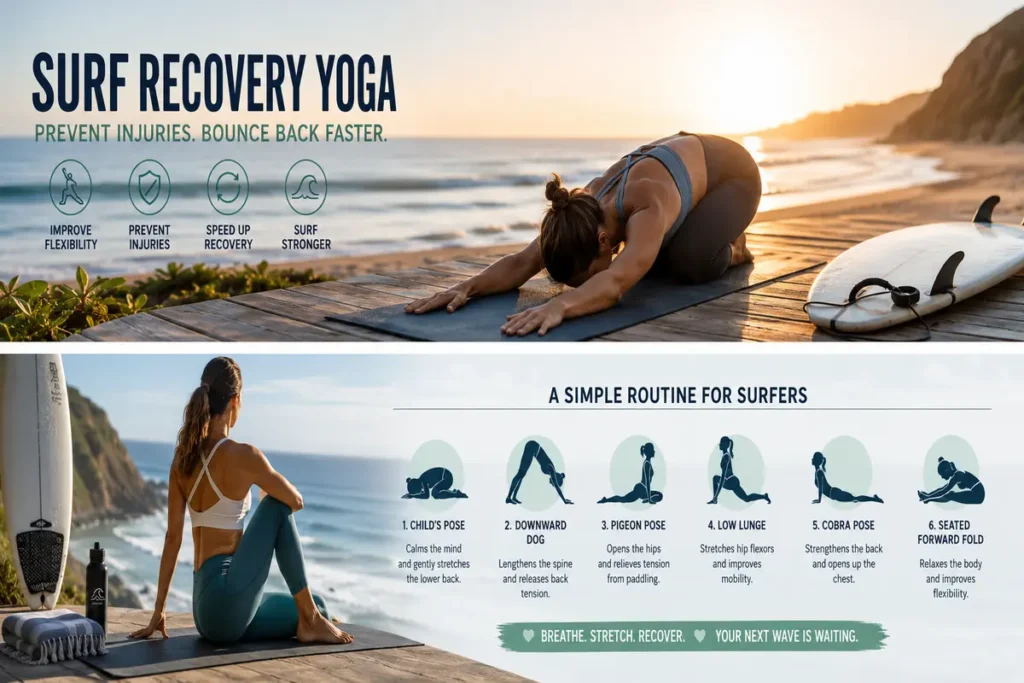
You don’t need a studio or an hour to spare. Ten to fifteen minutes on a towel right after you towel off is enough:
- Child’s Pose — Gently decompresses the lower back after hours of arching to paddle.
- Pigeon Pose — Releases tight hip flexors, one of the most common trouble spots for surfers.
- Thread the Needle — Eases shoulder and upper-back tension built up from repetitive strokes.
- Seated Forward Fold — Lengthens the hamstrings and calms the nervous system.
- Supine Twist — Releases tension along the spine and improves rotational mobility for your next session.
- Legs-Up-the-Wall — Helps drain fluid from tired legs and signals your body to shift into recovery mode.
Hold each pose for six to ten slow breaths. This isn’t about pushing into a deep stretch — it’s about giving overworked muscles a chance to reset.
Breathing as Part of Yoga for Surfers
Yoga for surfers isn’t only physical. Big sets, hold-downs, and a fast-paced lineup keep your nervous system on alert long after you’re out of the water. Slow, controlled breathing — extending your exhale a little longer than your inhale — signals your body to shift out of that alert state and into genuine rest. Pairing a few minutes of this breathing with your post-surf stretch sequence makes the whole routine more effective.
Building a Weekly Surf Recovery Yoga Habit
- After every session: A 10–15 minute recovery sequence like the one above.
- 1–2 times a week: A slower, restorative class focused on hips, shoulders, and the lower back.
- After a heavy surf trip: An extra recovery day before your next session, even if you feel fine.
The goal isn’t perfection — it’s consistency. A short recovery habit practiced regularly does far more for injury prevention than an occasional long session.
Mistakes That Undo Your Recovery
- Skipping recovery when you feel fine. Overuse injuries build up quietly, long before you feel pain.
- Stretching cold muscles too aggressively. Ease in gently, especially right after a session.
- Ignoring one-sided tightness. Surfers often favor one side when paddling and popping up — ask a teacher to check your alignment if something feels persistently off.
- Treating recovery as optional. It’s as much a part of training as time in the water.
Give Your Body the Recovery It Deserves
Surf recovery yoga won’t make headlines the way a big wave does, but it’s often the quiet difference between surfing three sessions a week pain-free and sitting out with a nagging injury. Try the sequence above after your next session and notice how you feel the following morning.
Want to build a full practice? Pair this with our poses for balance and strength guide, or join one of our yoga classes built specifically for surfers.
How does your body usually feel the day after a long session? Let us know what’s tightest for you — we might cover it in a future post.
FAQs
What is surf recovery yoga?
Surf recovery yoga is a series of gentle stretches and poses designed to help surfers reduce muscle soreness, improve flexibility, and recover faster after surfing.
Can Yoga for surfers help prevent injuries?
Yes. Regular recovery yoga improves mobility, balance, and joint stability, which can lower the risk of common surfing injuries such as shoulder strain, lower back pain, and tight hips.
How long should a surf recovery yoga session last?
A typical session lasts between 15 and 30 minutes. Even a short routine after surfing can promote recovery and reduce muscle stiffness.
Which yoga poses are best for surfers?
Some of the best poses include Downward-Facing Dog, Pigeon Pose, Child’s Pose, Cat-Cow Stretch, Cobra Pose, and Seated Forward Fold.
Should I do recovery yoga before or after surfing?
Recovery yoga is most effective after surfing because it helps relax muscles, improve circulation, and reduce post-session soreness.
Is Yoga for surfers suitable for beginners?
Absolutely. Beginners can perform simple, low-impact poses and gradually increase the intensity as their flexibility and strength improve.
How often should surfers practice recovery yoga?
Practicing two to five times per week is ideal, especially after intense surf sessions or during periods of frequent surfing.
Does surf recovery yoga improve surfing performance?
Yes. Better flexibility, balance, core strength, and mobility can lead to smoother paddling, improved pop-ups, and greater endurance in the water.
Can recovery yoga reduce muscle soreness?
Yes. Gentle stretching and controlled breathing increase blood flow, helping muscles recover more quickly and reducing delayed-onset muscle soreness (DOMS).
What equipment do I need for surf recovery yoga?
You only need a yoga mat and comfortable clothing. Optional accessories like yoga blocks, a strap, or a foam roller can provide additional support and enhance your recovery routine.