
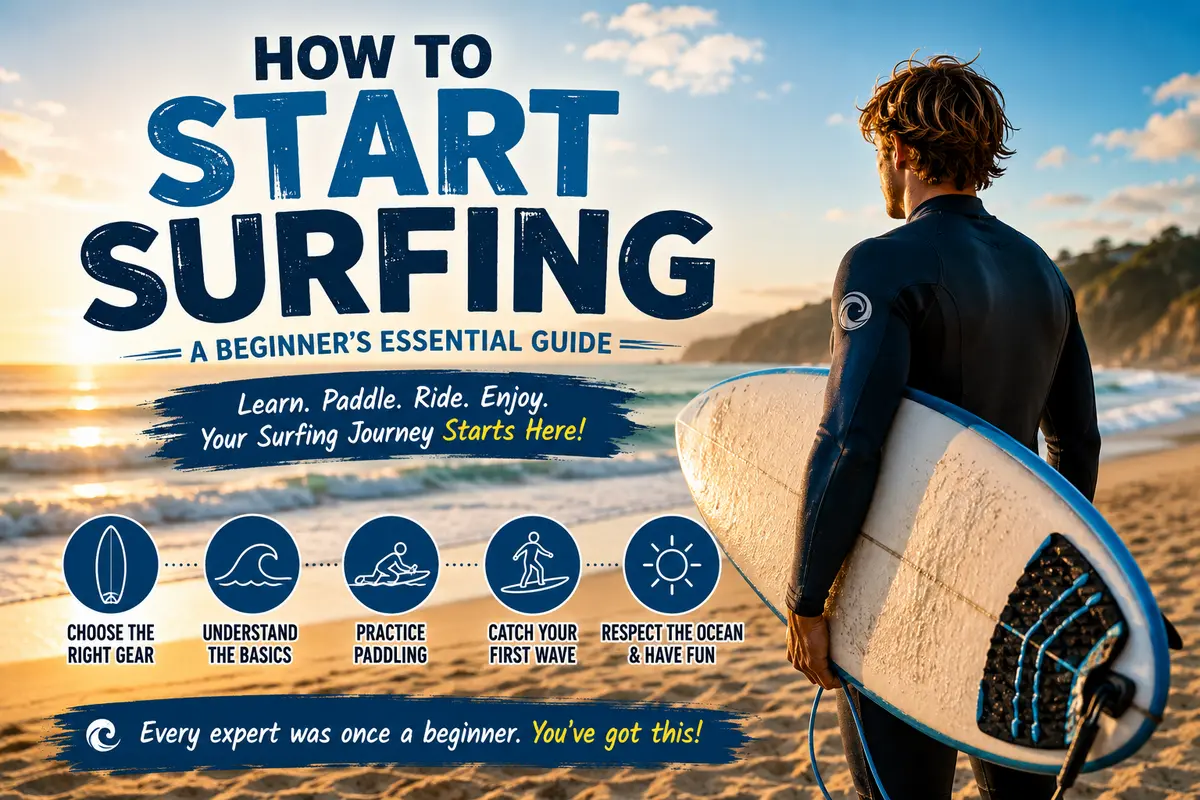
How to Start Surfing: Fearless Beginner Guide
Table of Contents
So You Want to Learn How to Start Surfing?
Ever watched a surfer glide effortlessly across a wave and thought, “I want to do that”? Good news: you can. The not-so-secret truth about learning how to start surfing is that it’s less about natural talent and more about the right gear, patient practice, and a bit of ocean know-how.
This guide walks you through everything you need — from picking your first board to standing up on your first green wave — so you can skip the guesswork and get in the water faster.
Step 1: Get the Right Gear Before You Start Surfing
The single biggest mistake beginners make when they start surfing is grabbing a board that looks cool instead of one that’s actually forgiving.
Your First Surfboard
Skip the short, sharp performance boards you see the pros riding. As a beginner, you want a soft-top or foam board that’s at least seven to nine feet long. The extra length and volume make it far easier to catch waves, paddle efficiently, and stay stable once you’re standing.
Leash, Wax, and Wetsuit
- Leash: Keeps your board attached to your ankle so it doesn’t drift off — or hit someone — after a wipeout.
- Surf wax or a traction pad: Prevents your feet from slipping when you pop up.
- Wetsuit: Optional in warm water, essential almost everywhere else. It keeps you in the water longer without getting cold.
Step 2: Understand the Basics Before You Paddle Out
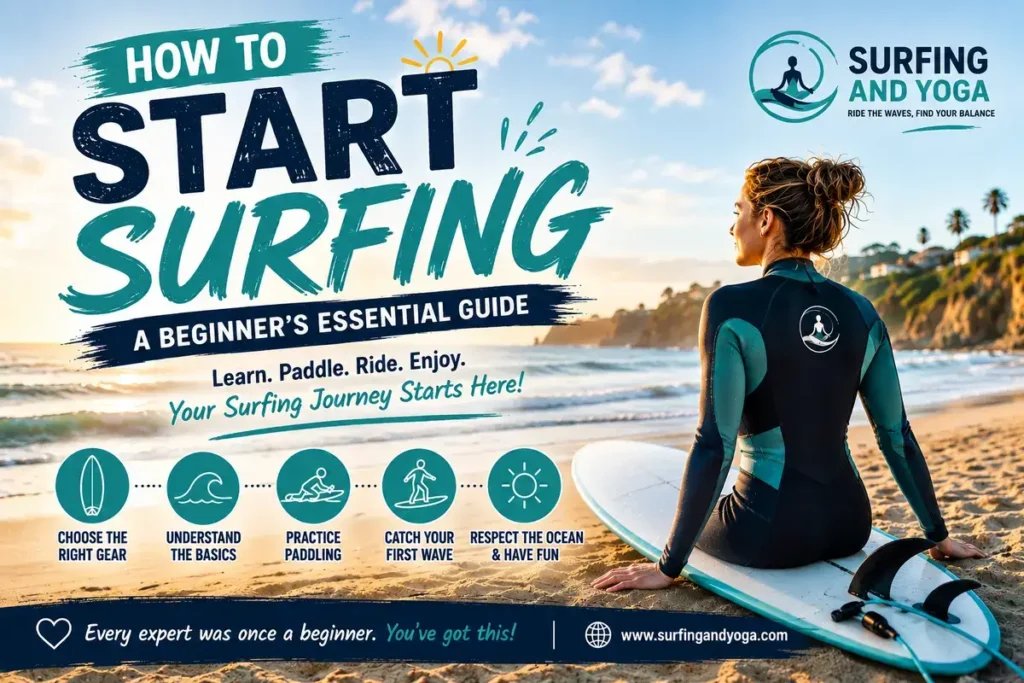
Before you even touch the water, it helps to understand a few fundamentals of how to start surfing the right way.
Choose a Beginner-Friendly Spot
Look for a beach break with small, gentle whitewash rather than a reef or point break. Sandy bottoms are far more forgiving when you fall — and you will fall, a lot, at first.
Watch Before You Paddle
Spend at least 15–20 minutes watching the water before you go in. Notice where other surfers are catching waves, where the current is pulling, and how experienced the crowd looks. This single habit will save you a lot of frustration.
Step 3: Learn to Paddle Properly
Paddling looks simple, but doing it efficiently is what separates exhausted beginners from surfers who catch wave after wave. Lie on your board with your chest slightly arched, hands positioned under your shoulders, and eyes forward. Keep the nose of the board just grazing the surface — too high or too low, and you’ll fight the water instead of gliding through it.
Step 4: The Pop-Up — Your First Real Milestone
The pop-up is the single most important skill when you start surfing, and it’s worth practicing on dry sand before you ever try it on a wave.
- Lie flat on your board, hands placed under your chest.
- Push up explosively in one motion — no half-steps, no kneeling first.
- Land with your feet roughly shoulder-width apart, knees bent, weight centered.
- Keep your eyes up and looking toward where you want to go, not down at your feet.
Practice this movement dozens of times on land until it feels automatic. Muscle memory here will save you precious seconds in the water.
Step 5: Catching Your First Wave
Once you’re comfortable paddling and popping up, it’s time to put it together:
- Turn your board to face the shore as the wave approaches.
- Paddle with building intensity — start around 30–50% effort, then increase as the wave lifts your board.
- Feel the wave take over, then pop up in one smooth motion.
- Keep your knees bent and your gaze forward to maintain balance.
Don’t be discouraged if your first dozen attempts end in a tumble. Every surfer — including the pros — went through exactly this stage.
Surf Etiquette Every Beginner Should Know
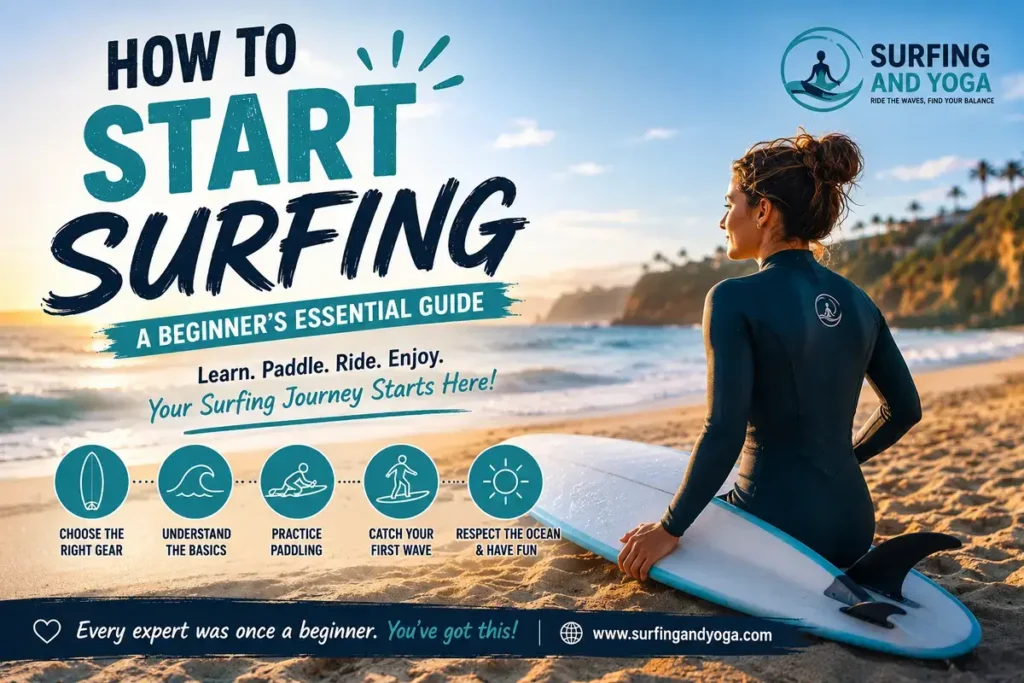
Learning how to start surfing isn’t only about technique; it’s also about respecting the lineup:
- Right of way: The surfer closest to the breaking part of the wave (the peak) has priority.
- Never drop in: Don’t take off on a wave someone else is already riding.
- Hold your board: In crowded whitewash, keep control of your board so it doesn’t become a hazard to others.
- Be patient: Everyone was a beginner once. Watch, learn, and wait your turn.
Staying Safe While You Start Surfing
Safety should never be an afterthought. Before paddling out anywhere new, check the local surf and weather report, and always be aware of rip currents — powerful channels of water that can pull swimmers away from shore. Learning to recognize and escape a rip current is one of the most important skills you can develop, and the NOAA guide to rip current safety is a great place to start. As a beginner, never surf alone, and always match the conditions to your skill level rather than the other way around.
Common Mistakes Beginners Make
- Choosing a board that’s too small or too advanced. Volume and length are your friends early on.
- Skipping lessons. A few sessions with an instructor can save you months of frustrating trial and error.
- Surfing in conditions beyond your level. Bigger isn’t better when you’re still learning how to start surfing.
- Giving up too soon. Progress in surfing is rarely linear — most breakthroughs come right after the most frustrating sessions.
Your Next Step Into the Water
Learning how to start surfing is a process of small wins: your first successful paddle, your first pop-up on the sand, your first wobbly ride to shore. Each one builds toward the moment it finally clicks.
If you’d like hands-on guidance, our beginner surf lessons are designed to get you standing up faster and safer than learning solo. And once you’re catching waves regularly, our yoga for surfers classes can help you build the balance and flexibility to take your surfing even further.
What’s holding you back from paddling out for the first time? Let us know in the comments — we might just answer your question in a future post.
FAQ: How to Start Surfing
- Is surfing difficult for beginners?
Surfing can be challenging at first, but with the right board, proper instruction, and consistent practice, most beginners can catch their first waves within a few sessions.
- What is the best age to How to start surfing?
There is no perfect age. Children, teenagers, and adults can all learn to surf. The key is choosing lessons and equipment that match your age and fitness level.
- What surfboard should a beginner use?
A soft-top longboard, typically 8–9 feet long, is the best choice for beginners because it offers excellent stability, buoyancy, and safety.
- How long does it take to learn how to start surfing?
Most beginners learn the basics in 3–10 lessons. Becoming confident in different wave conditions usually takes several months of regular practice.
- Do I need to be a strong swimmer?
Yes. You should be able to swim comfortably before learning to surf. Strong swimming skills improve both your confidence and safety in the water.
- What should I wear when surfing?
Wear a wetsuit in cold water or a rash guard and board shorts or a swimsuit in warm conditions. Always use a leash attached to your surfboard.
- Where should beginners learn to How to start surfing?
Choose a beach with gentle, sandy-bottom waves and beginner-friendly conditions. Avoid crowded lineups and powerful reef or point breaks until you gain more experience.
- Is taking surf lessons worth it?
Yes. Professional surf lessons help beginners learn proper techniques, improve faster, and understand important ocean safety and surf etiquette.
- What are the biggest mistakes beginner surfers make?
Common mistakes include choosing the wrong board, paddling too late, standing up too quickly, looking down instead of ahead, and ignoring surf etiquette.
- How often should I practice surfing?
Aim to surf at least once or twice a week. Consistent practice helps build paddling strength, balance, wave-reading skills, and confidence much faster.
- Is surfing a good workout?
Yes. Surfing provides a full-body workout that improves cardiovascular fitness, core strength, balance, flexibility, and endurance while reducing stress.
- What safety tips should every beginner know?
Always check the surf forecast, surf with a buddy, respect local surf rules, avoid dangerous conditions, and never surf beyond your skill level.
These FAQs are optimized for SEO and are suitable for adding FAQPage schema markup, which can help your article qualify for rich results in search engines.