
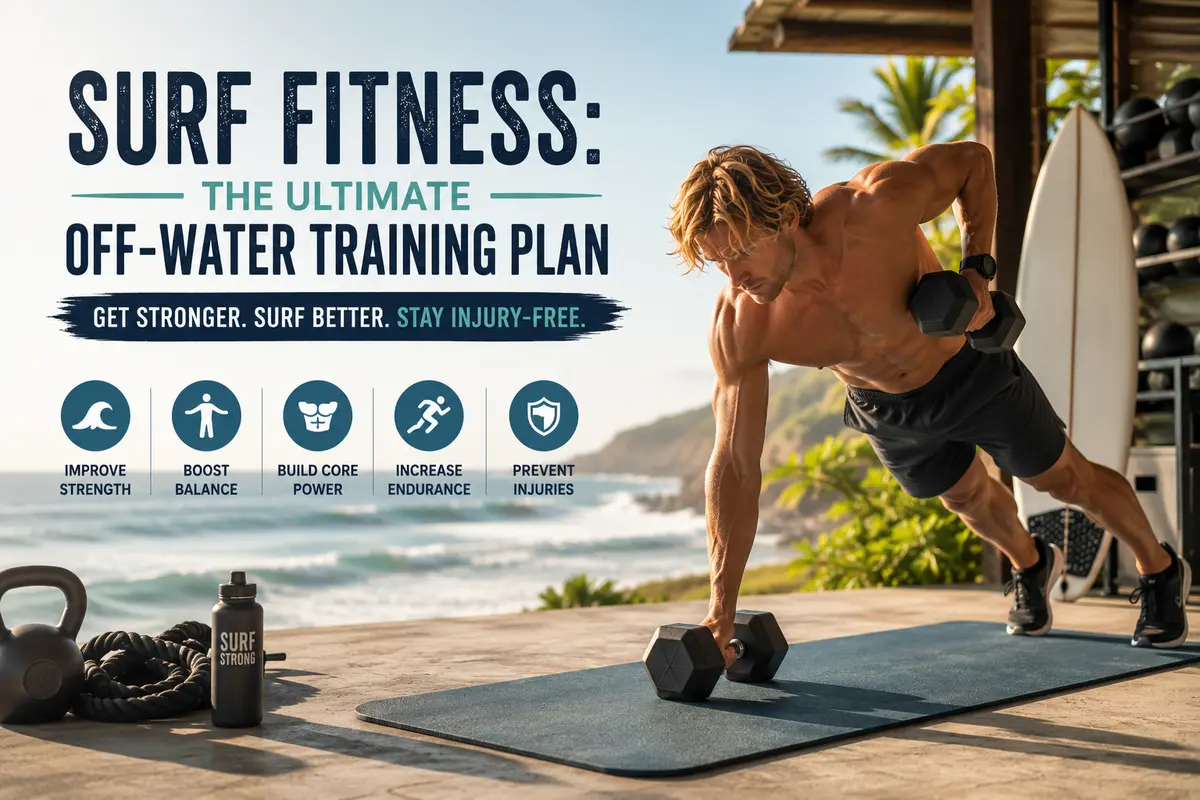
Surf Fitness: An Off-Water Strength & Conditioning Plan
Table of Contents
Why Surf Fitness Matters On and Off the Board
Ever paddle out feeling strong, only to be gassed by your fifth wave? Or pop up late because your legs just didn’t fire fast enough? That’s not a skill problem — it’s a surf fitness problem, and it’s entirely fixable without setting foot in the water.
Surfing looks effortless from the beach, but it demands a rare mix of endurance, explosive power, rotational strength, and balance. A dedicated surf fitness routine trains all four, so when a good set finally rolls in, your body is ready instead of running on fumes.
The 4 Pillars of Surf Fitness
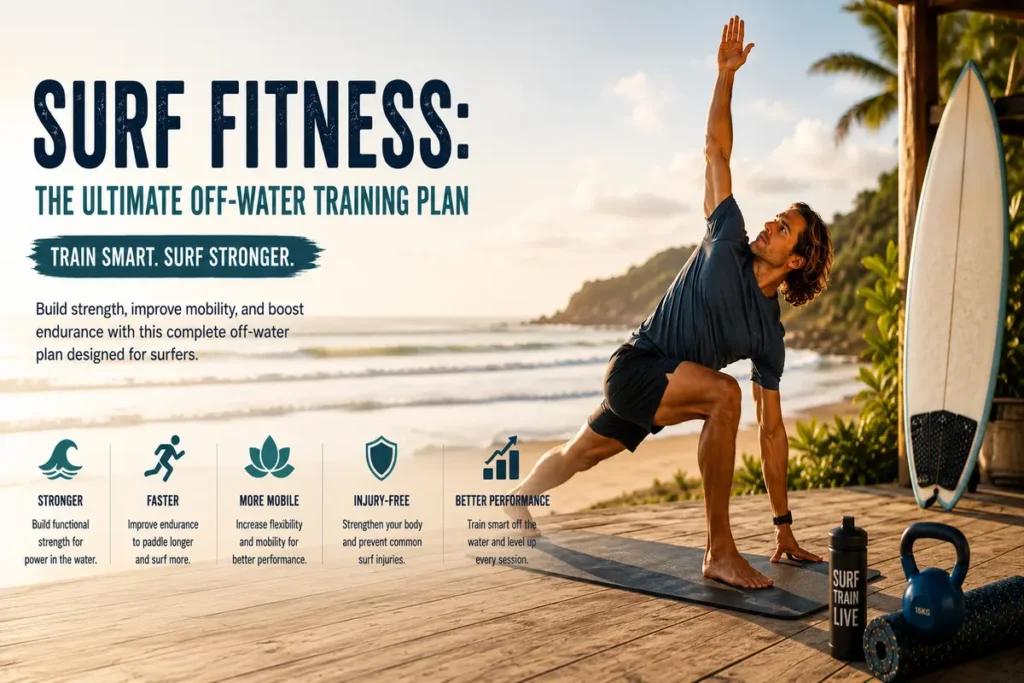
1. Cardiovascular Endurance
Paddling out, chasing position, and racing back to the lineup after a wipeout all demand serious aerobic capacity. Interval-style cardio — short bursts of intensity followed by brief recovery — mirrors the stop-start rhythm of a real session far better than steady jogging does.
2. Functional Strength
This is the backbone of any surf fitness program. Pull-ups, push-ups, and rowing all build the back, shoulder, and chest strength you rely on for paddling power, while your legs need squat and lunge variations to drive explosive pop-ups and hold a stance through a turn.
3. Core and Rotational Power
Nearly every surfing maneuver — bottom turns, cutbacks, duck dives — runs through your core. Rotational exercises like wood chops and medicine ball throws train the twisting power that static crunches simply don’t.
4. Balance and Stability
A strong surfer who can’t balance still falls off the board. Single-leg exercises and unstable-surface training (think BOSU balls or a balance disc) sharpen the proprioception you need to stay locked in on a moving board.
A 4-Week Off-Water Surf Fitness Plan
You don’t need a full gym membership to build real surf fitness — just consistency and a plan. Here’s a simple weekly structure to build over a month:
- Day 1 — Strength: Pull-ups, push-ups, goblet squats, plank holds.
- Day 2 — Cardio Intervals: Swimming, rowing, or sprint intervals (1 minute hard, 30 seconds easy, repeat).
- Day 3 — Active Recovery: Mobility work or a gentle yoga for surfers session.
- Day 4 — Power & Rotation: Kettlebell swings, medicine ball rotational throws, surfer burpees.
- Day 5 — Balance & Core: Single-leg deadlifts, BOSU ball pop-up drills, side planks.
- Weekend — Surf or Rest: Apply what you’ve built, and give your body at least one full rest day.
Add one set or a few reps each week as your surf fitness improves. Progress doesn’t need to be dramatic — small, steady increases compound fast.
Best Exercises for Surf Lessons
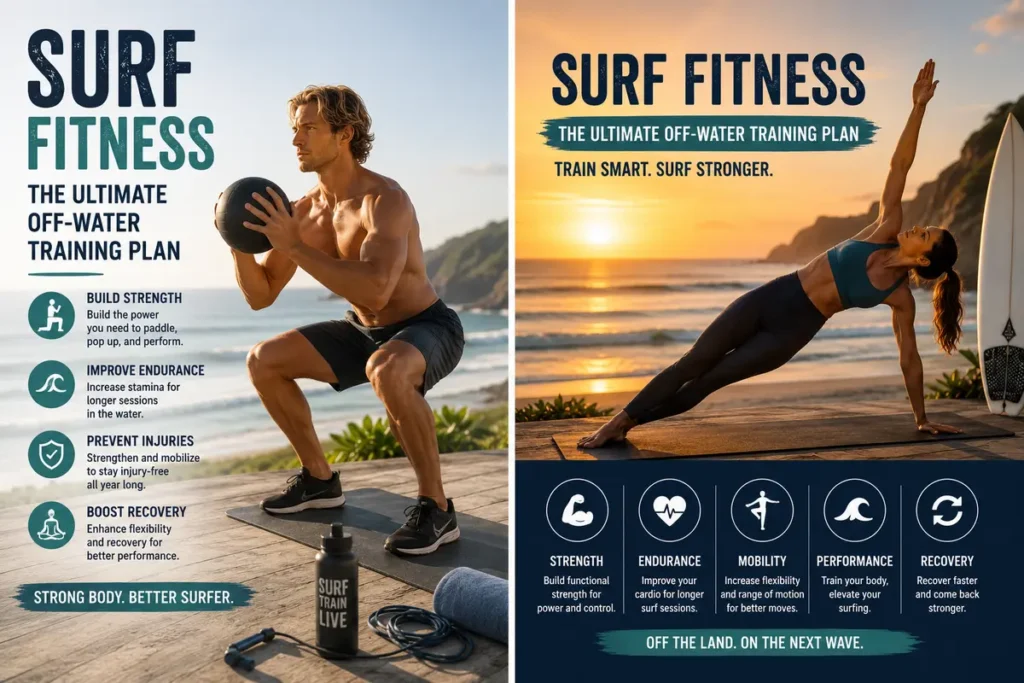
- Pull-ups or Inverted Rows — Build the lat and upper-back strength that powers every paddle stroke.
- Kettlebell Swings — Train explosive hip power, useful for pop-ups and generating speed down the line.
- Medicine Ball Rotational Throws — Develop the twisting core power behind every turn.
- Surfer Burpees — Combine cardio and the pop-up motion in a single, surf-specific movement.
- Single-Leg Balance Drills — Improve the stability that keeps you locked onto the board.
- Paddle Sprints (pool or Vasa trainer) — Directly train the exact muscles and motion you use to catch waves.
Recovery: The Overlooked Half of Surf Fitness
It’s tempting to think more training always equals more progress, but muscles actually get stronger during rest, not during the workout itself. Overtraining without adequate recovery is one of the fastest ways to end up injured and off the water for weeks. Pair your strength days with mobility work — our surf recovery yoga routine is a great way to actively recover between hard sessions.
Common Surf Fitness Mistakes to Avoid
- Only training strength, and ignoring mobility. A stiff, muscular surfer still struggles with pop-ups.
- Skipping the warm-up. Jumping straight into heavy lifts or sprints raises injury risk.
- Training like a bodybuilder. Isolated single-joint exercises build less surf-specific strength than functional, full-body movements.
- Ignoring rest days. Surf fitness gains happen in recovery, not just in the gym.
- Inconsistency. Two focused sessions a week, every week, beats one exhausting workout every few months.
Build Your Surf Fitness Starting This Week
You don’t need perfect conditions to make progress — a solid surf fitness routine works rain or shine, swell or flat spell. Pick two or three days this week, run through the exercises above, and notice the difference the next time you paddle out.
If you’re newer to the sport, pairing this with our surf lessons and coaching tips will help translate your new strength into real progress in the water. For a deeper look at structuring a full training cycle, Surf Strength Coach’s guide to designing surf training programs is a solid next read.
What’s the weakest link in your surfing — endurance, strength, or balance? Tell us, and we’ll help you build a plan around it.
FAQs
How often should I do surf fitness training each week?
Two to three focused sessions a week is enough for most surfers, combined with at least one full rest day and regular surf time itself.
Do I need a gym to build surf fitness?
No. Most of the exercises in this plan — pull-ups, squats, kettlebell swings, planks — can be done at home with minimal equipment or bodyweight alone.
How long until I notice a difference in the water?
Most surfers report feeling less winded and popping up faster within three to four weeks of consistent training.
What’s the single most important exercise for surfing?
There isn’t one — paddling power, core rotation, and balance all matter. Pull-ups, medicine ball throws, and single-leg drills together cover the main demands of surfing.
Can I do surf fitness training on days I also surf?
Light mobility or balance work is fine on surf days, but save heavier strength or cardio sessions for days off the water to avoid overtraining.
Is surf fitness training suitable for beginners?
Yes. Beginners can start with bodyweight versions of each exercise and build up intensity as strength and confidence improve.
How does surf fitness reduce injury risk?
Building strength, mobility, and balance together means your body can absorb the awkward, explosive positions surfing demands, which is where most strains and pulls happen.