Yoga for Beginners: Amazing Steps to Get Started
Table of Contents
Yoga for Beginners: Your Ultimate Starter Guide
Have you ever rolled out a yoga mat, looked around at a room full of people folding themselves into pretzels, and thought, I don’t belong here? You’re not alone. Almost everyone who now moves through a sun salutation without thinking once stood exactly where you’re standing — unsure, a little stiff, and wondering if yoga for beginners is even a real thing or just a marketing phrase.
It’s real. And it’s yours to claim.
This guide walks you through everything you need to start yoga with confidence: the poses, the breathing, the mistakes to skip, and the mindset that actually makes a practice stick. No jargon, no judgment — just a clear path forward.
Why Yoga for Beginners Isn’t About Flexibility
Here’s the misconception that stops more people than tight hamstrings ever will: you think you need to be flexible before you start yoga. In reality, flexibility is the result of practice, not the price of admission.
When you begin yoga for beginners, you’re training three things at once:
- Body awareness — noticing how you stand, breathe, and hold tension without realizing it
- Breath control — learning to slow down and use your breath as an anchor
- Mental focus — giving your mind one thing to do instead of ten
You don’t need to touch your toes on day one. You need to show up, breathe, and let your body do what it can do today.
What You Actually Need to Get Started
You don’t need a studio membership or a wall of props to begin. Here’s your realistic starter kit:
- A yoga mat — even a basic one gives your joints grip and cushioning
- Comfortable clothing — anything that lets you move without pulling or riding up
- A quiet 15–20 minutes — consistency matters more than duration
- An open mind — you’re a beginner today; you won’t be one forever
If you want to add anything later, a strap and a block can help with poses where your hands can’t quite reach the floor. But don’t let gear become another excuse to delay starting.
The Breath: Your Most Underrated yoga for beginners Tool
Before you learn a single pose, learn to breathe on purpose. Most yoga for beginners programs skip straight to postures, but breath is what separates yoga from simple stretching.
Try this right now, wherever you’re sitting:
- Inhale slowly through your nose for a count of four
- Hold gently for a count of two
- Exhale through your nose for a count of six
Notice how your shoulders drop slightly on the exhale? That’s your nervous system shifting gears. You’ll use this same breath — often called ujjayi breath in more advanced classes — to move through poses later.
Why Breath Comes First
When your breath is steady, your poses become steadier too. Rushed breathing usually means you’re pushing too hard into a stretch. If you ever notice yourself holding your breath during a pose, that’s your body’s signal to ease back.
Beginner-Friendly Poses to Start With
You don’t need fifty poses. You need five or six that you can return to again and again until they feel like home.
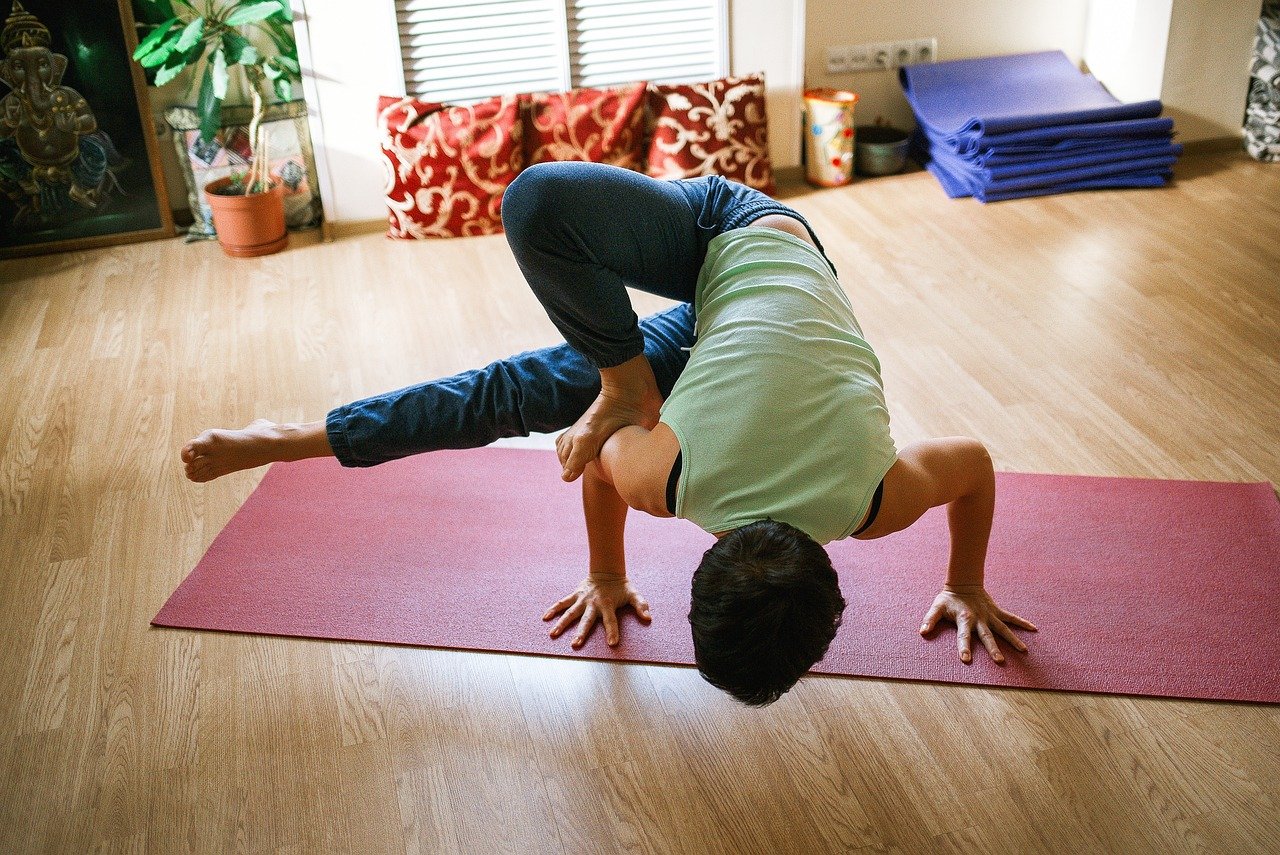
1. Child’s Pose (Balasana)
A resting pose that stretches your lower back and hips while calming your mind. Kneel, sit back on your heels, and fold forward with your arms extended or resting by your sides.
2. Cat-Cow Stretch
On hands and knees, alternate between arching your back (cow) and rounding it (cat) as you breathe. This gently wakes up your spine and is a favorite starting move in almost every yoga for beginners class.
3. Downward-Facing Dog
Perhaps the most recognizable yoga pose, and often the most intimidating. Keep your knees bent if your hamstrings are tight — a slight bend is completely normal and doesn’t make the pose “wrong.”
4. Mountain Pose (Tadasana)
It looks like standing still, but it’s actually an active pose. Ground through all four corners of your feet, lengthen your spine, and notice your breath. This is where you learn what good posture actually feels like.
5. Warrior II
A strong, grounding pose that builds leg strength and stability. Step your feet wide, bend one knee, and extend your arms — you’ll feel powerful faster than you’d expect.
6. Corpse Pose (Savasana)
Never skip this one. Lying flat on your back at the end of practice lets your nervous system absorb everything you just did. It’s rest with a purpose, not a break from the “real” practice.
Building a Home Yoga Practice That Actually Sticks
Motivation gets you to day one. A system gets you to day one hundred. Here’s how to make your home yoga practice something you keep, not something you abandon by February.
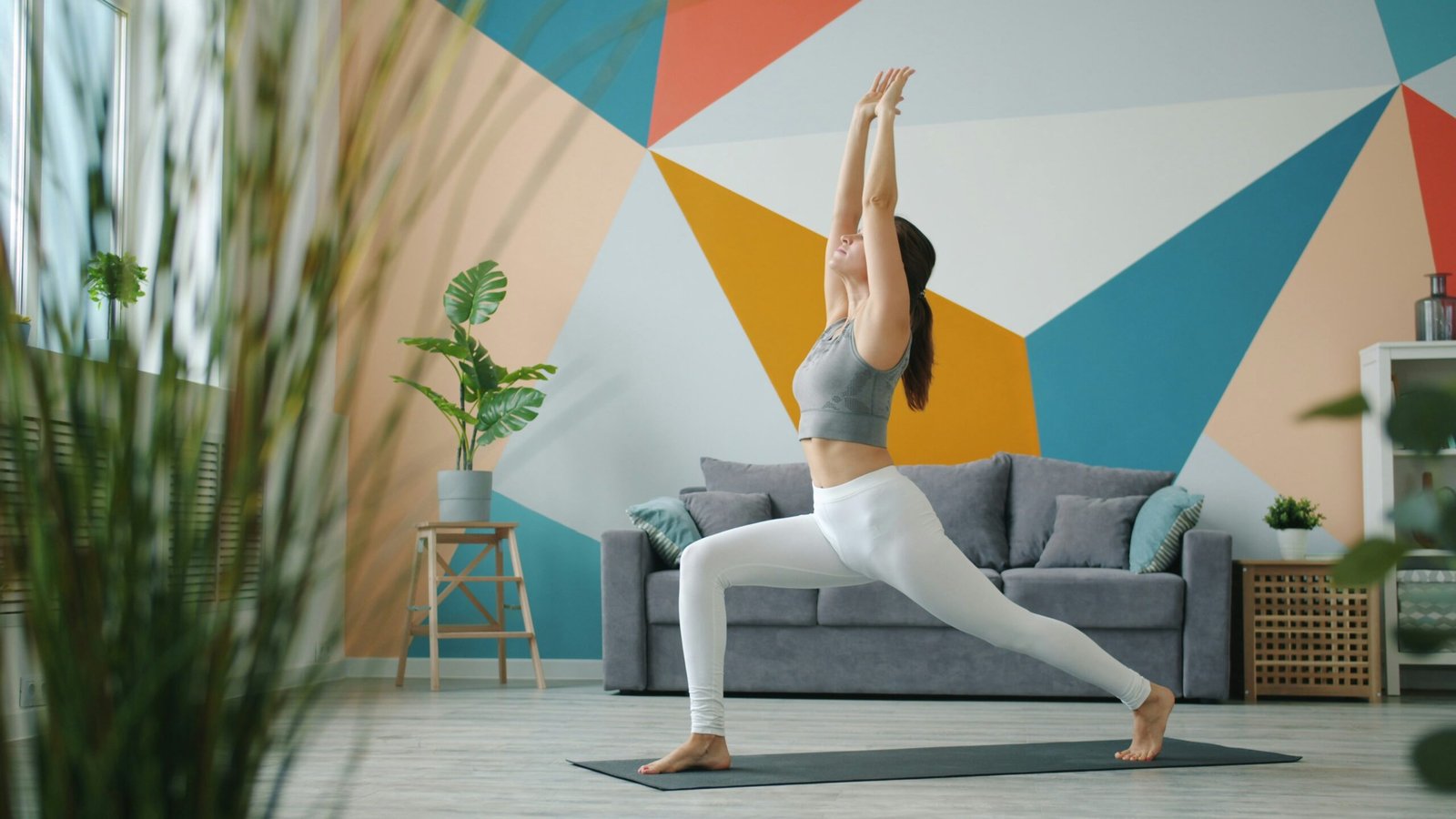
- Pick a consistent time. Morning yoga routines work well because they happen before life gets in the way.
- Start smaller than feels necessary. Ten minutes, four days a week, beats sixty minutes once and never again.
- Use free guided videos. You don’t need a live teacher to learn correct alignment as a beginner.
- Track how you feel, not how you look. A slightly looser lower back or better sleep is progress, even if a pose still looks “wrong” in the mirror.
- Give yourself twelve sessions before judging results. Most beginners quit right before the pieces start clicking.
Common Beginner Mistakes (and How to Skip Them)
Even well-intentioned beginners fall into a few predictable traps:
- Comparing yourself to advanced students. Their practice took years. Yours is one day old.
- Forcing a stretch instead of breathing into it. Pain is a stop sign, not a challenge to push through.
- Practicing on a full stomach. Give yourself at least an hour after eating.
- Skipping rest poses. Child’s pose and savasana aren’t optional extras — they’re part of how your body integrates the work.
- Choosing intensity over consistency. A gentle daily practice beats an intense weekly one for building lasting habits.
How Yoga for Beginners Connects to Bigger Wellness Goals
Once your practice settles into a rhythm, you might notice it doesn’t stay confined to your mat. Better breath control shows up when you’re stressed at work. Improved balance shows up the next time you’re on a paddleboard or catching a wave. That’s part of why so many people who start with simple yoga for beginners routines eventually look for deeper experiences, like a dedicated wellness retreat where movement, rest, and nature come together in one immersive reset.
If you’re curious about how professionals approach breath and movement training more broadly, resources like Harvard Health Publishing offer well-researched, accessible explanations of yoga’s physical and mental benefits.
Your Simple 4-Week Starter Plan
- Week 1: 10 minutes daily — breathing practice plus Cat-Cow, Child’s Pose, and Mountain Pose
- Week 2: 15 minutes daily — add Downward-Facing Dog and Warrior II
- Week 3: 20 minutes, 5 days a week — link poses into a slow, breath-based flow
- Week 4: 20–25 minutes, 5–6 days a week — add Savasana at the end of every session, no exceptions
By the end of four weeks, you won’t be an expert. You’ll be something better for a beginner to become: consistent.
Frequently Asked Questions
Is yoga for beginners hard on the body?
Not when it’s approached correctly. Beginner-level yoga is designed to meet your current flexibility and strength, not push past it. Modifications like bent knees or shorter holds are normal, not failures.
How often should a beginner practice yoga?
Three to five short sessions a week build habit and body awareness faster than one long weekly class. Consistency matters more than duration, especially early on.
Do I need to be flexible to start yoga for beginners classes?
No. Flexibility develops through practice. Most people who look flexible in yoga simply practiced consistently over months or years — they didn’t start that way.
Can yoga for beginners help with stress and anxiety?
Yes. The combination of slow breathing and focused movement activates your parasympathetic nervous system, which is your body’s natural “rest and recover” state.
What’s the best time of day to practice yoga as a beginner?
Morning works well for building consistency, but the honest answer is: whatever time you’ll actually show up for, repeatedly.
Ready to Roll Out Your Mat?
You don’t need the perfect studio, the perfect leggings, or the perfect flexibility to start. You need ten minutes and a willingness to breathe on purpose. Start with one pose today — Child’s Pose is a forgiving place to begin — and build from there.
If you’re ready to take your practice further, explore our guide to wellness retreats and discover how a few immersive days of yoga, surf, and rest can deepen everything you’ve started here.